

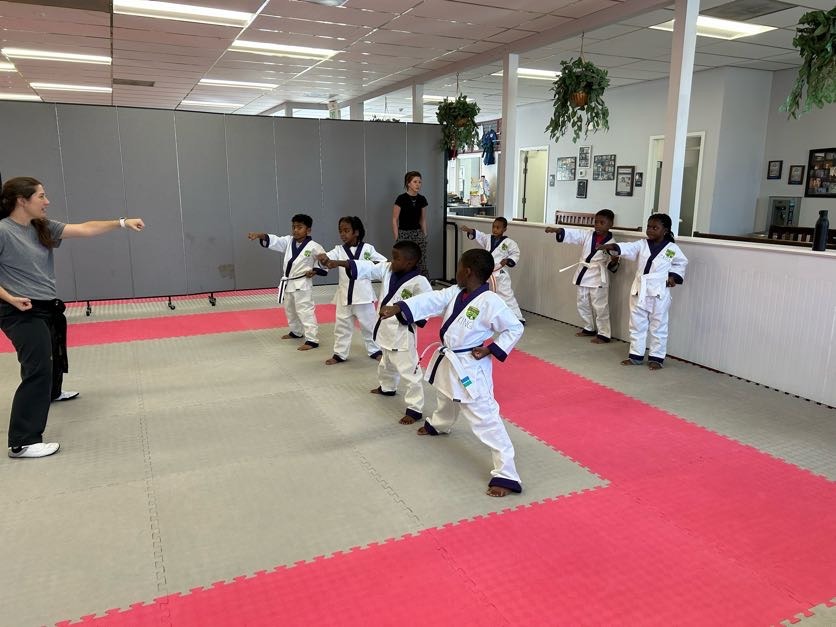
Healthy, Happy, Confident Kids
Every parent strives to raise children who are healthy, happy, and confident. However, concerns such as self-control, listening skills, focus, and self-esteem are common. Many parents wonder whether their children possess the self-esteem necessary for success. You are not alone—children today face a complex and challenging world.
This article emphasizes that traditional values are effective, providing coaching tips to help parents foster healthy, happy, and confident children.
The Five Skills of Listening
Listening can be a challenge for children, both at home and in school. Over 35 years of martial arts instruction have led to a five-step approach that parents can use to teach their children effective listening skills:
- Listening Posture: Encourage your child to sit or stand up straight, with shoulders back, chest lifted, and chin high. This physical change can significantly improve listening retention.
- Direct Eye Contact: Insist on eye contact during conversations. This helps your child focus on the words being spoken.
- Repeat the Message: Have your child repeat back what was said. For example, “So, Mom, you’d like me to clean up my room and feed the cat before I play my video games?”
- Ask Questions: Teach your child to ask respectful questions, demonstrating that they are attentive and engaged.
- Look for More Information: Train older children to consider the speaker’s emotions and intentions. Ask, “How does the speaker feel about what they’re saying?”
Practice these skills with your child, gently reminding them when their focus slips. Celebrate effective listening with praise, reinforcing positive behaviors.
How to Raise Your Child’s Self-Esteem
In today’s predominantly negative world, self-esteem is constantly at risk. It is essential for parents to protect and nurture their child’s self-esteem. The following ten steps provide guidance:
- Remind your child of past accomplishments, building their self-image on successes and letting failures fade.
- Encourage improvement over perfection by setting reasonable expectations.
- Cultivate family pride by sharing stories of relatives’ achievements and sacrifices.
- Provide feedback without excessive criticism; criticize privately and praise publicly.
- Teach honesty, as lying undermines self-esteem.
- Promote pride in personal appearance.
- Guide children toward friends with high self-esteem and away from negative influences.
- Encourage big dreams and a broad perspective.
- Support healthy habits, including regular exercise and a balanced diet.
- Help your child master a couple of activities, discouraging them from frequently switching interests.
More on Self-Esteem
Parents may inadvertently lower their child’s self-esteem. Awareness of these pitfalls is crucial:
- Comparing children, especially siblings.
- Setting unattainable standards and only rewarding high achievements.
- Frequent yelling.
- Granting excessive freedom.
- Allowing young children too many choices.
- Not enforcing consequences after rule violations.
- Holding children to standards parents themselves do not follow.
- Discouraging high aspirations.
- Spending limited time with children.
- Expecting children to follow words rather than actions.
To build self-esteem, parents must consistently do the opposite of these behaviors and remain diligent in their efforts.
Dealing with Fear
Fear can prevent children from pursuing desired activities, cause stress and illness, and hinder happiness. There are two types of fear:
- Protective Fear: Arises in genuinely dangerous situations, such as facing traffic or a natural disaster, and should be heeded.
- Non-Protective Fear: Occurs in situations without real danger, such as meeting new people or trying new things. These fears should be overcome.
Help your child conquer non-protective fears through visualization exercises. Have your child mentally rehearse successful outcomes in challenging situations, reinforcing confidence with each repetition.
Dealing with Popularity Issues
Popularity can be a double-edged sword. While being liked is pleasant, the pursuit of popularity can lead to unhealthy behaviors and peer pressure. Some children value popularity at any cost, while others insist on maintaining their authenticity.
Parents should teach children to:
- Do what is right, regardless of others’ opinions.
- Value loyalty, integrity, and kindness as the foundation of genuine popularity.
- Treat everyone with respect and courtesy.
- Resist peer pressure to engage in inappropriate behavior.
- Understand and appreciate family relationships and heritage.
Children with strong family pride are less likely to be swayed by the desire for excessive popularity and are recognized for their integrity.
Three Tips for Developing Self-Confidence
These self-confidence-building techniques are appropriate for children of all ages:
- Create a “Victory List” with your child, recording all successes. Reviewing this list during challenging times can boost confidence.
- Encourage regular exercise and good nutrition, as a healthy body contributes to a sense of capability and self-assurance.
- Help your child break large tasks into manageable steps. Progress in small increments fosters confidence and makes challenges less intimidating.
How to Teach Your Child Etiquette
Etiquette refers to the socially expected conduct in various settings. Children learn social rules through play and daily interactions. Parents can foster good manners by:
- Raising expectations for polite behavior, including apologies and expressions of gratitude.
- Using encouraging words to recognize effort.
- Teaching children to take turns, whether with siblings or during games with friends.
- Modeling and praising empathy when children show understanding of others’ feelings.
Tips for Developing Patience
Patience is the ability to remain calm during challenges. While impatience is natural in young children, developing patience is essential for adapting to life’s delays and pursuing long-term goals. Parents can help by:
- Explaining moments of patience during daily life.
- Praising patient behavior in children.
- Resisting the urge to give in to impatience or tantrums.
- Creating opportunities for quiet, relaxing activities.
How to Teach Your Child to Be Dependable
Dependability means others can rely on you. While children may struggle with being dependable, they look to adults for examples. Parents can foster dependability and self-discipline by:
- Consistently being on time for commitments and activities.
- Keeping promises made to children.
- Meeting deadlines, even when inconvenient.
- Following through on stated consequences and rewards.
Good Manners
Good manners encompass respect, courtesy, and consideration. Martial arts training reinforces these social skills alongside physical development. Parents can cultivate good manners by:
- Praising children for using manners without prompting.
- Enjoying time together and discussing the value of good behavior.
- Communicating clearly to avoid confusion.
- Reflecting on positive traits in acquaintances to highlight the importance of politeness.
Self-Discipline
Self-discipline involves doing what improves oneself, even when it is difficult. Parents often demonstrate self-discipline through everyday sacrifices. To encourage self-discipline in children:
- Remind children to think before speaking and consider others’ feelings.
- Share personal examples of wise choices and self-control.
- Promote self-respect by encouraging positive self-talk.
- Highlight role models of character from everyday life.
Confident Communication
Communicating with confidence is an essential life skill for children. How something is said—volume, tone, and pitch—often matters more than the words themselves. Parents can help children develop confident communication by:
- Complimenting children on appropriate volume and progress in speaking up.
- Using measured speech and explaining the importance of tone and meaning.
- Encouraging practice to prepare for public speaking or presentations.
- Discouraging negative self-comparisons and focusing on individual strengths.
I hope this article provides coaching tips to help you raise a healthy, happy, and confident child.
Click here to schedule a free consultation and introductory class to see if our martial arts program is right for your family! We invite you to come explore how our martial arts program can inspire your child to achieve great things. There’s no risk, no cost, no hassles. And we guarantee your continued satisfaction.
Author: Senior Master Roger Cavanaugh, 8th Degree Black Belt, has studied martial arts since 1977, and has taught martial arts in Waldorf, MD, since 1987.
